 01
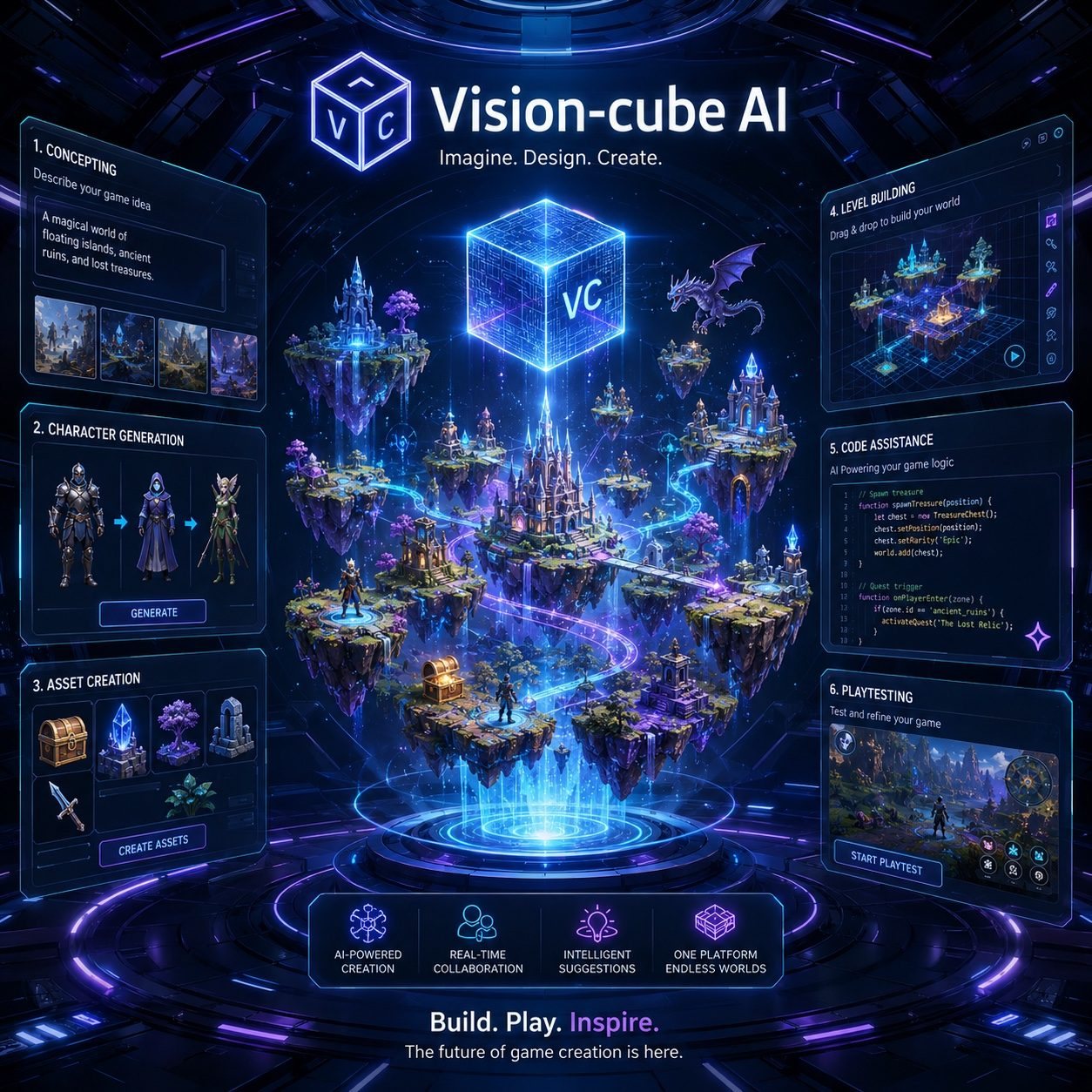
Concept development
Turn a rough idea into a clear game direction.
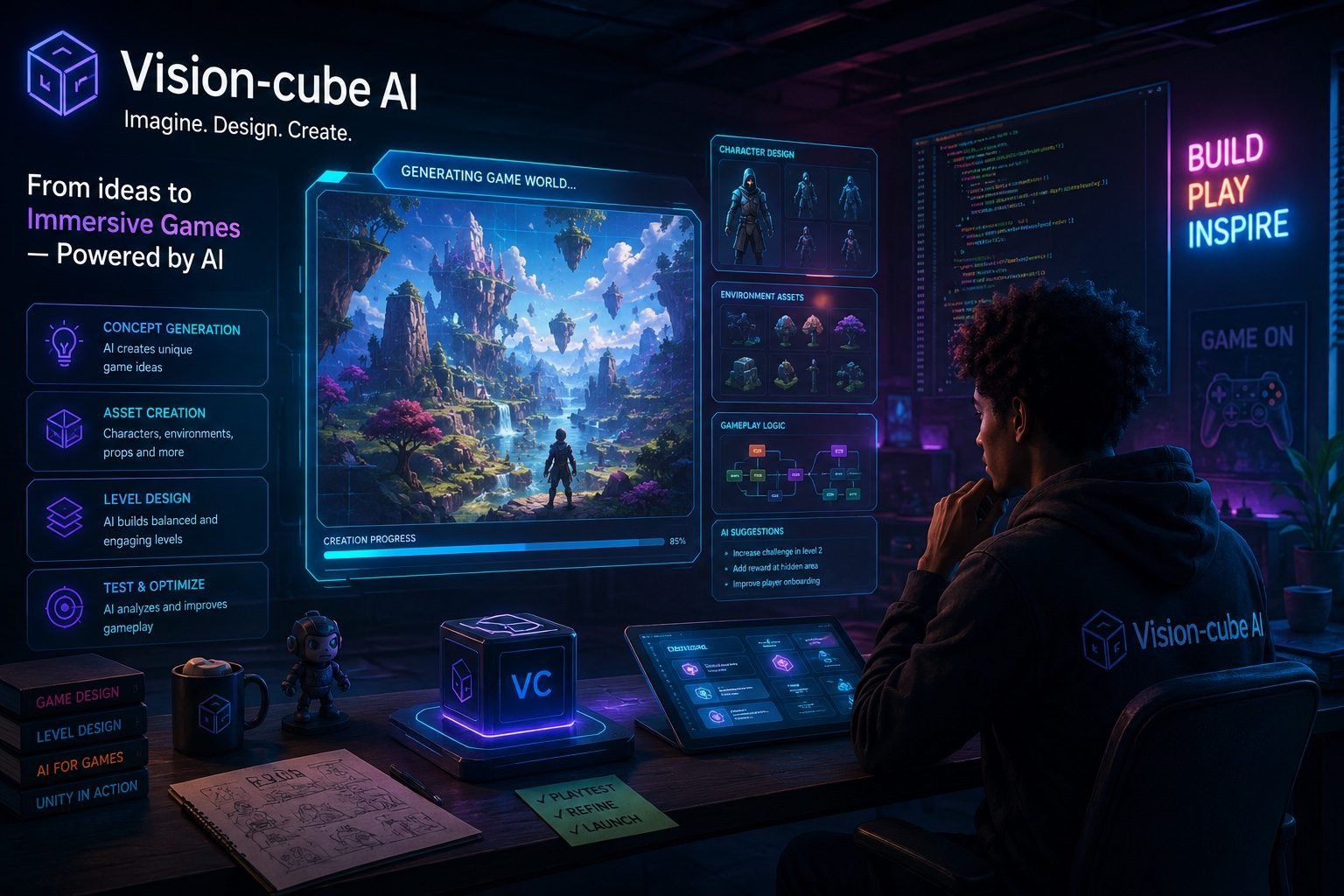
Establish the premise, genre, audience, player fantasy, mood and setting, and answer the questions your project needs before production gets expensive.
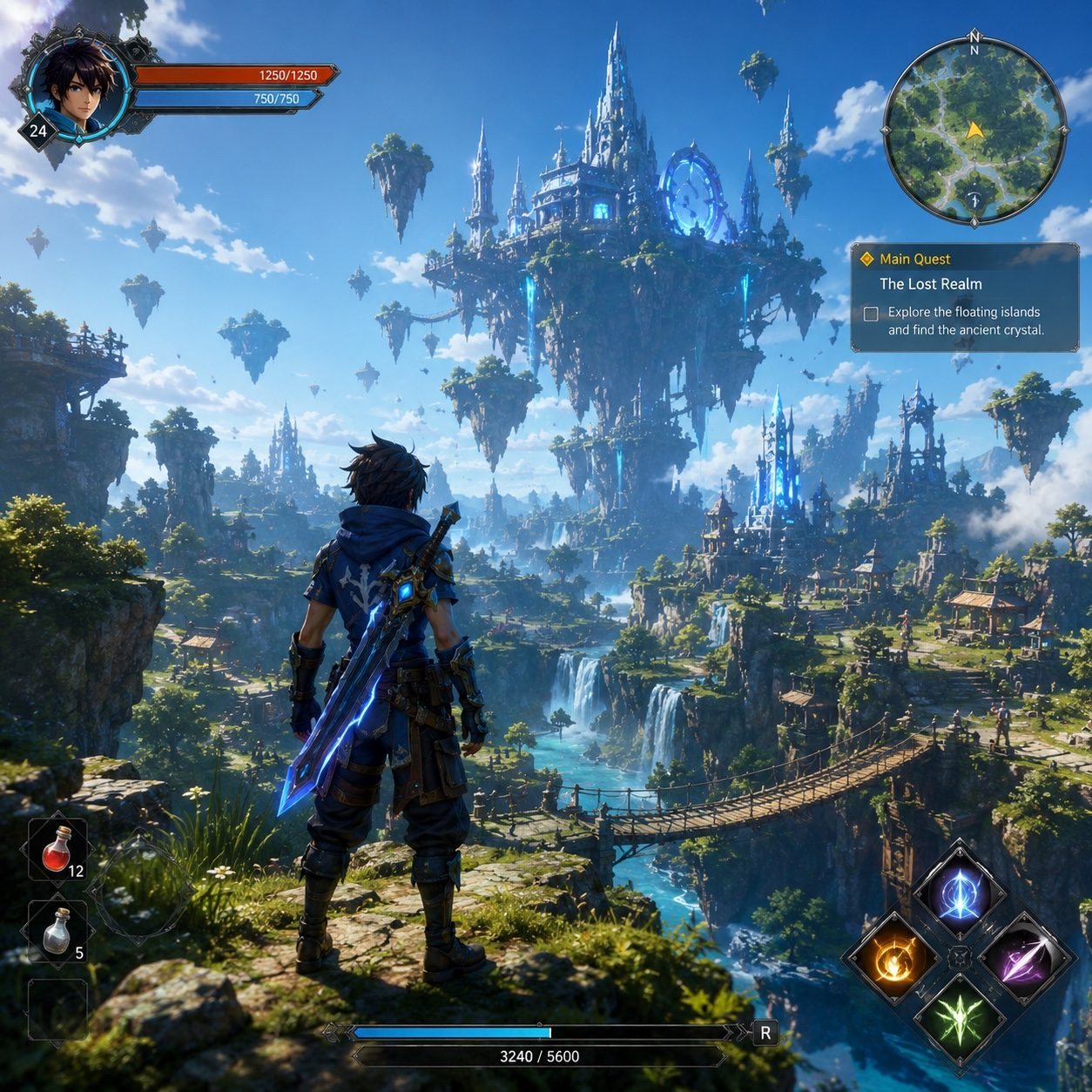
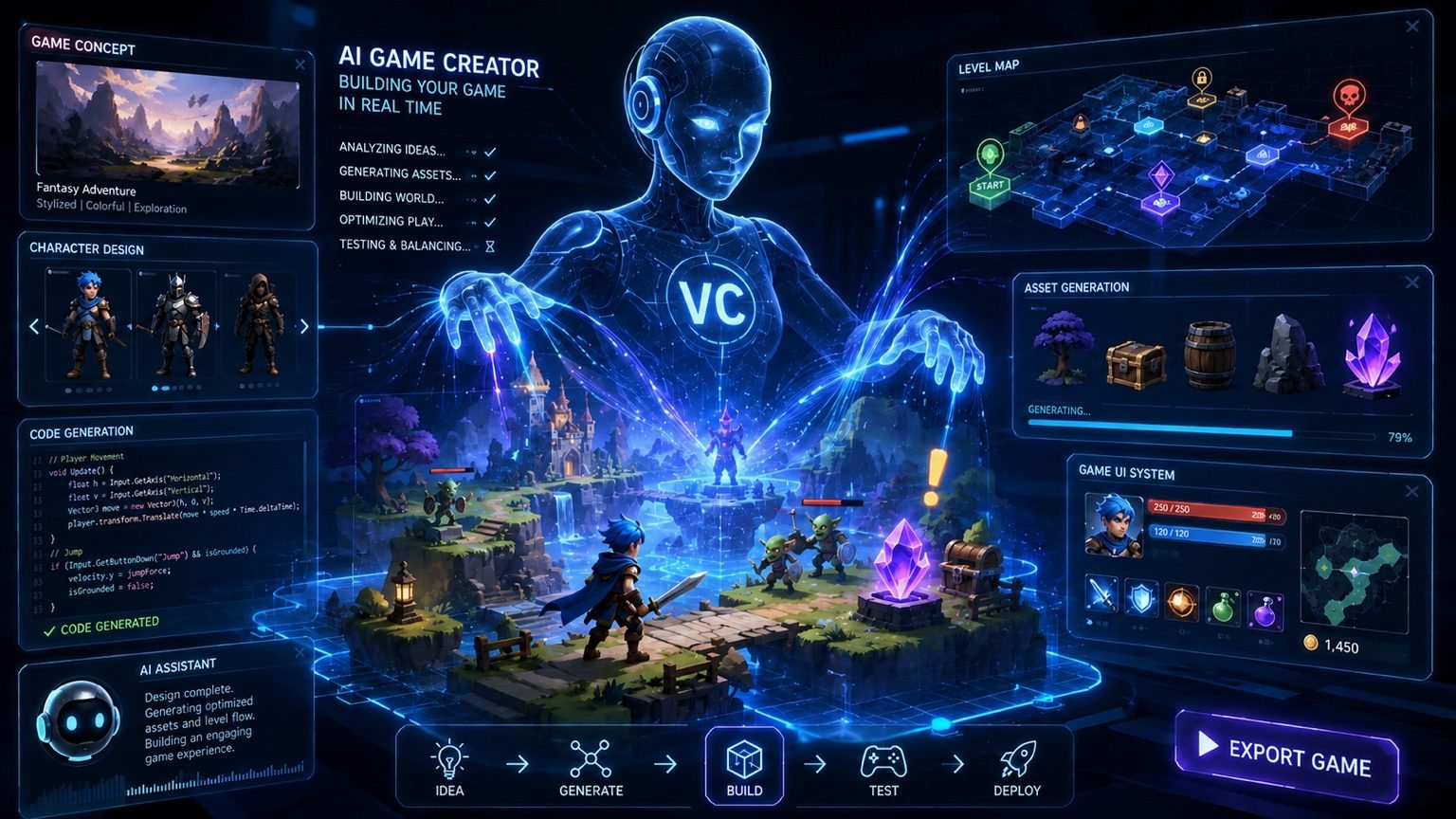
Move through the whole early-production stack without scattering your idea across disconnected tools.
01Establish the premise, genre, audience, player fantasy, mood and setting, and answer the questions your project needs before production gets expensive.
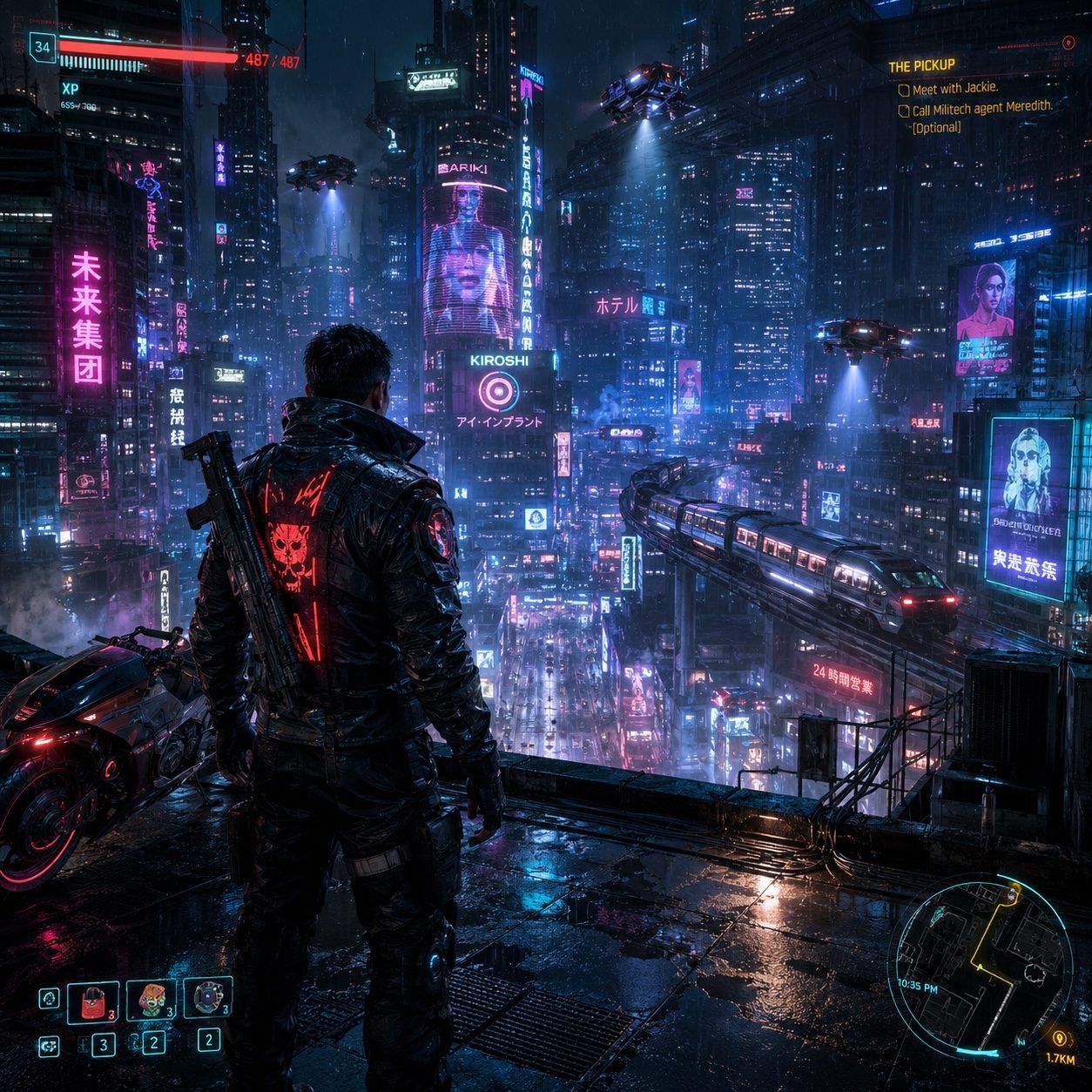
02Explore environments, visual tone, characters, props and materials: the decisions that make a game feel like one coherent place.
 03
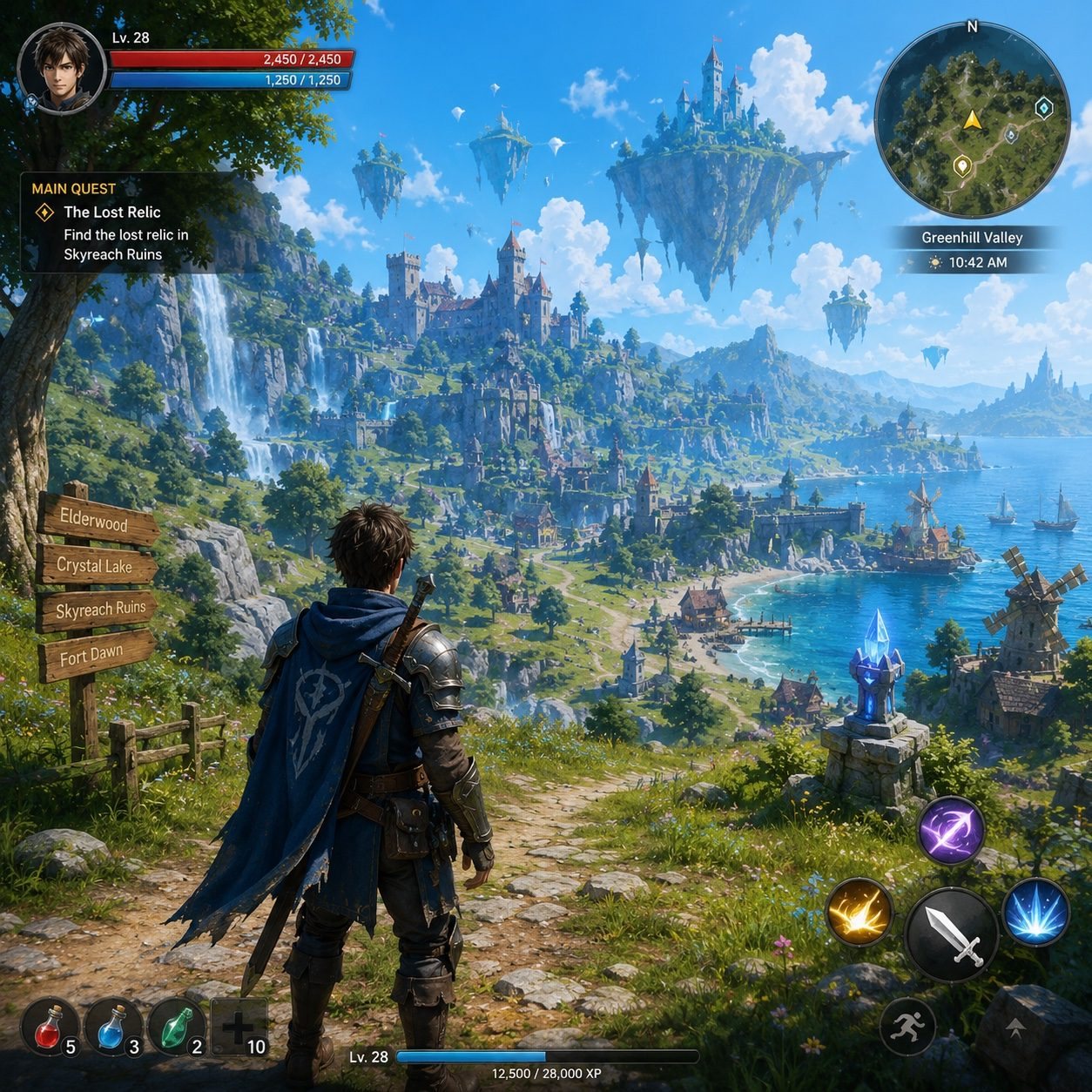
Translate the premise into mechanics, objectives, progression, interactions, rewards and constraints you can evaluate as a playable system.
 04
Develop characters, factions, quests, dialogue direction and story arcs in the same creative context, not as a separate writing exercise.
 05
Outline HUD, menus, feedback, information hierarchy and interface states so player experience is shaped alongside the systems.
 06
Shared project context means you can refine one part of the game without forgetting what it affects elsewhere.
Different teams, same problem: turning creative direction into production.
Explore and structure a game direction when time, budget and team size are limited.
A shared starting point for concepts, assets, systems and prototypes.
Turn briefs into visual and playable directions before a full build.
Understand how world, story, mechanics and UI influence each other.
Join the launch list and be among the first creators to try VisionCube AI.